
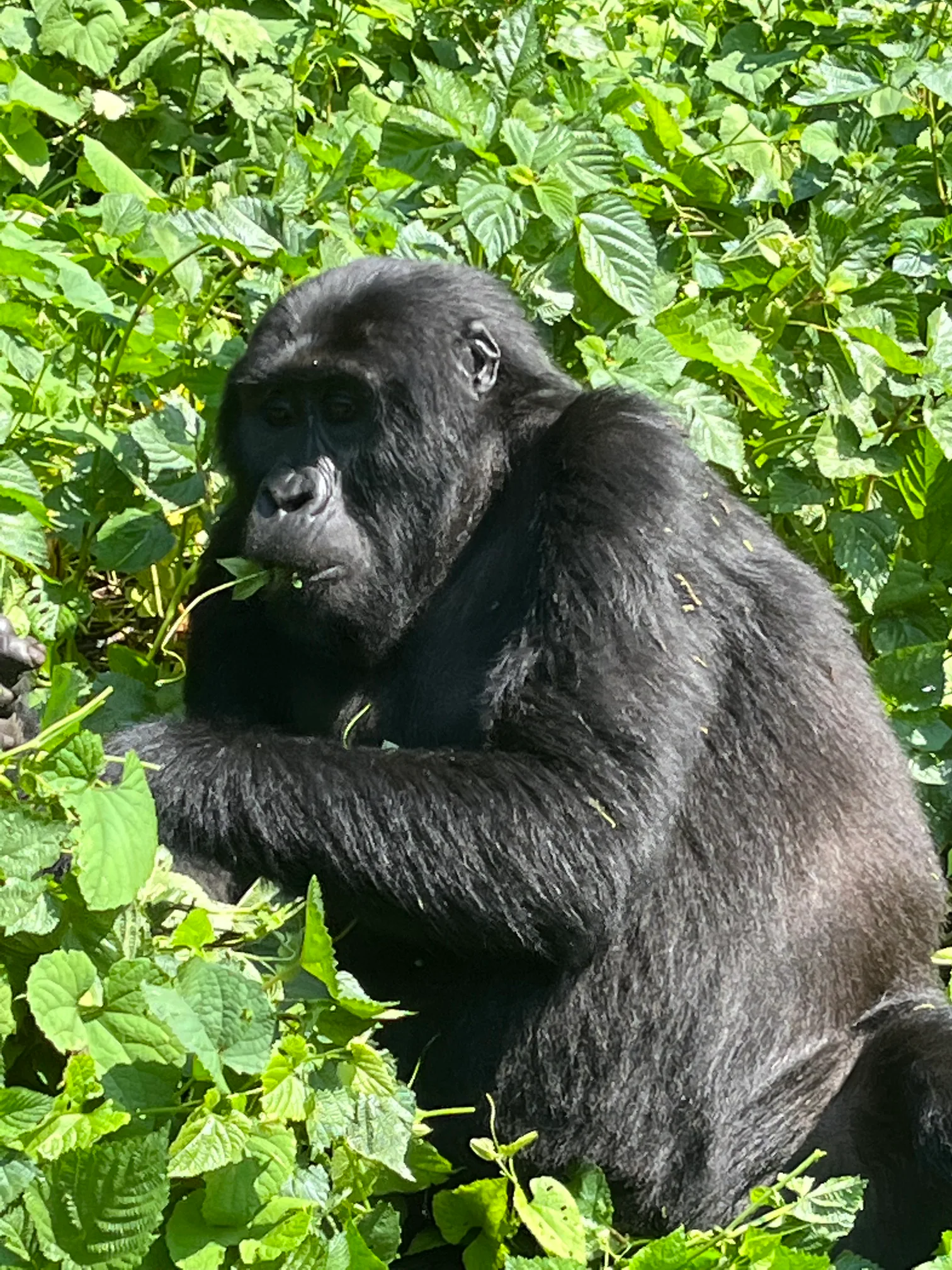
The forest was still waking when we started walking. Damp earth softened every footstep and the morning mist clung to the canopy above us. Somewhere beyond the next curtain of leaves was a family of mountain gorillas.
Gorilla trekking is often described as a bucket-list experience, but that phrase barely captures it. The excitement comes not only from the encounter itself, but from the journey into their world: the climb, the quiet, the anticipation and the extraordinary work of the trackers who lead the way.
The moment everything goes quiet
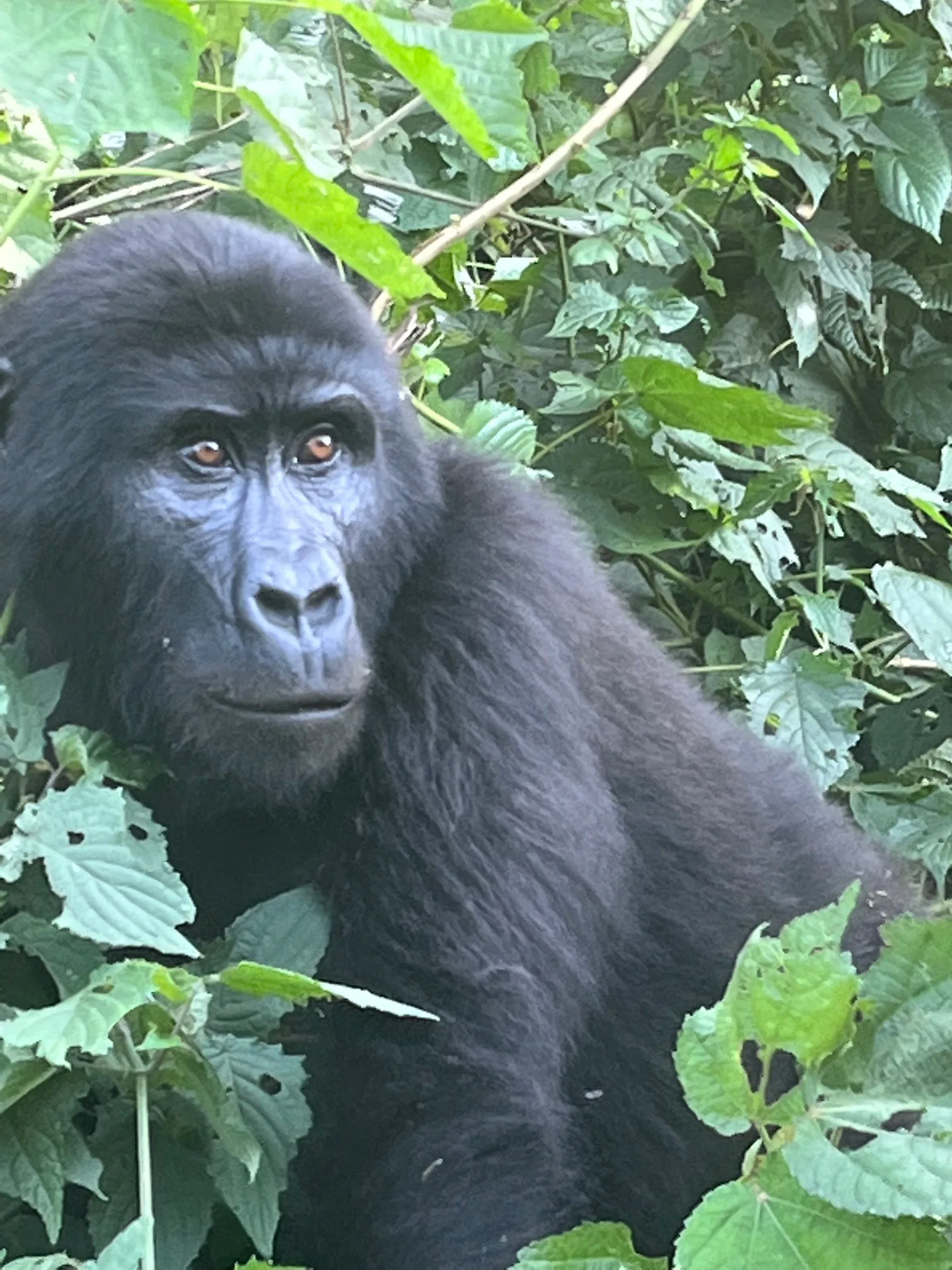
Our guide raised a hand and the group stopped. A branch moved, leaves rustled, and then a silverback appeared—calm, powerful and entirely at home. We kept the respectful distance set by our guides and watched as the family ate, rested and moved through the greenery.
For one remarkable hour, the rest of the world seemed to disappear.
Nothing felt staged or hurried. It was a privilege to observe the gorillas on their terms, with expert guides making sure the experience was safe and responsible for visitors and wildlife alike.
How to prepare for your trek
The terrain can be steep, muddy and unpredictable, so preparation makes an enormous difference. Good walking boots, gardening gloves, lightweight layers and a waterproof jacket are essentials. Hiring a local porter is also highly recommended: it supports the community and gives you welcome help on the harder sections.
Ewa’s practical notes
- Permits are limited and should be arranged well in advance.
- A reasonable level of fitness will help you enjoy the day.
- Pack water, a light lunch and protection for your camera.
- Follow your guide’s instructions throughout the encounter.
When should you travel?
Gorilla trekking is possible throughout the year. The drier periods generally offer easier walking conditions, while the greener months can bring fewer visitors and wonderfully atmospheric forest scenery. The right time depends on how the trek fits with the rest of your African journey.
Many travellers combine Uganda or Rwanda with a classic safari, time beside a lake or a few restorative days in a beautiful lodge. This is where thoughtful planning matters: the pace before and after the trek can transform a remarkable encounter into a beautifully balanced holiday.