
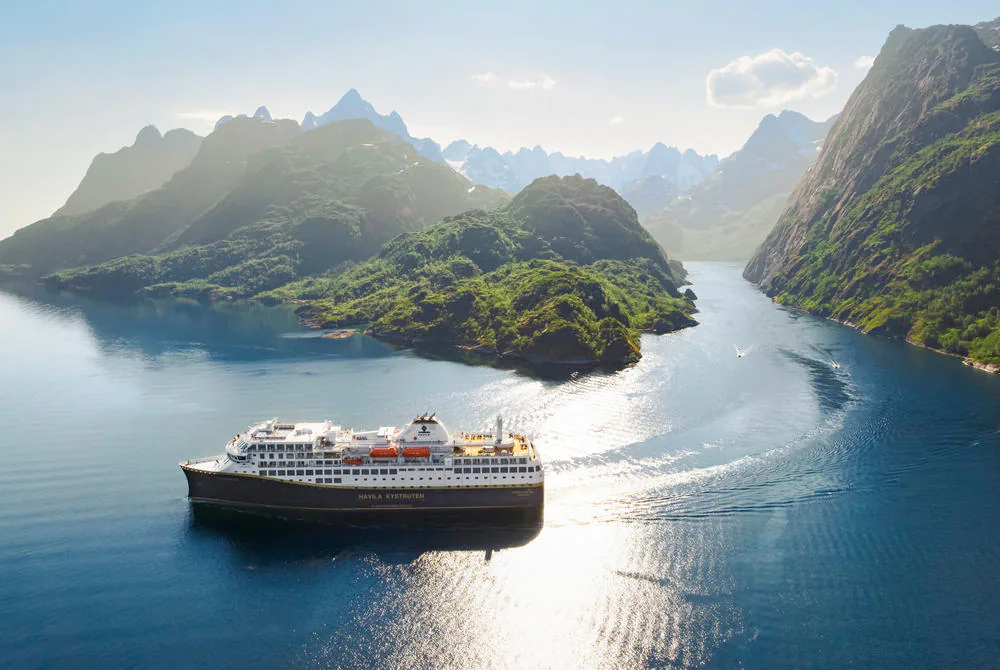
Norway’s fjords have a way of making you slow down. Mountains rise almost vertically from deep, glassy water. Waterfalls tumble from high plateaux, tiny farms cling to apparently impossible slopes and villages appear at the water’s edge as if they have always belonged there.
The scale is dramatic, but the experience can feel wonderfully calm. A journey through the fjords is not about rushing between sights. It is about watching the light move across the mountains, breathing in the clear air and giving each place enough time to reveal itself.
Landscapes that stay with you
Every fjord has its own character. Sognefjord reaches deep into the country, opening the way to quiet communities and magnificent mountain scenery. Nearby, narrow Nærøyfjord feels more intimate, with towering rock walls enclosing the water. Geirangerfjord is known for its sweeping viewpoints and waterfalls, while the Hardanger region brings orchards, gentle villages and access to some of Norway’s most memorable walks.
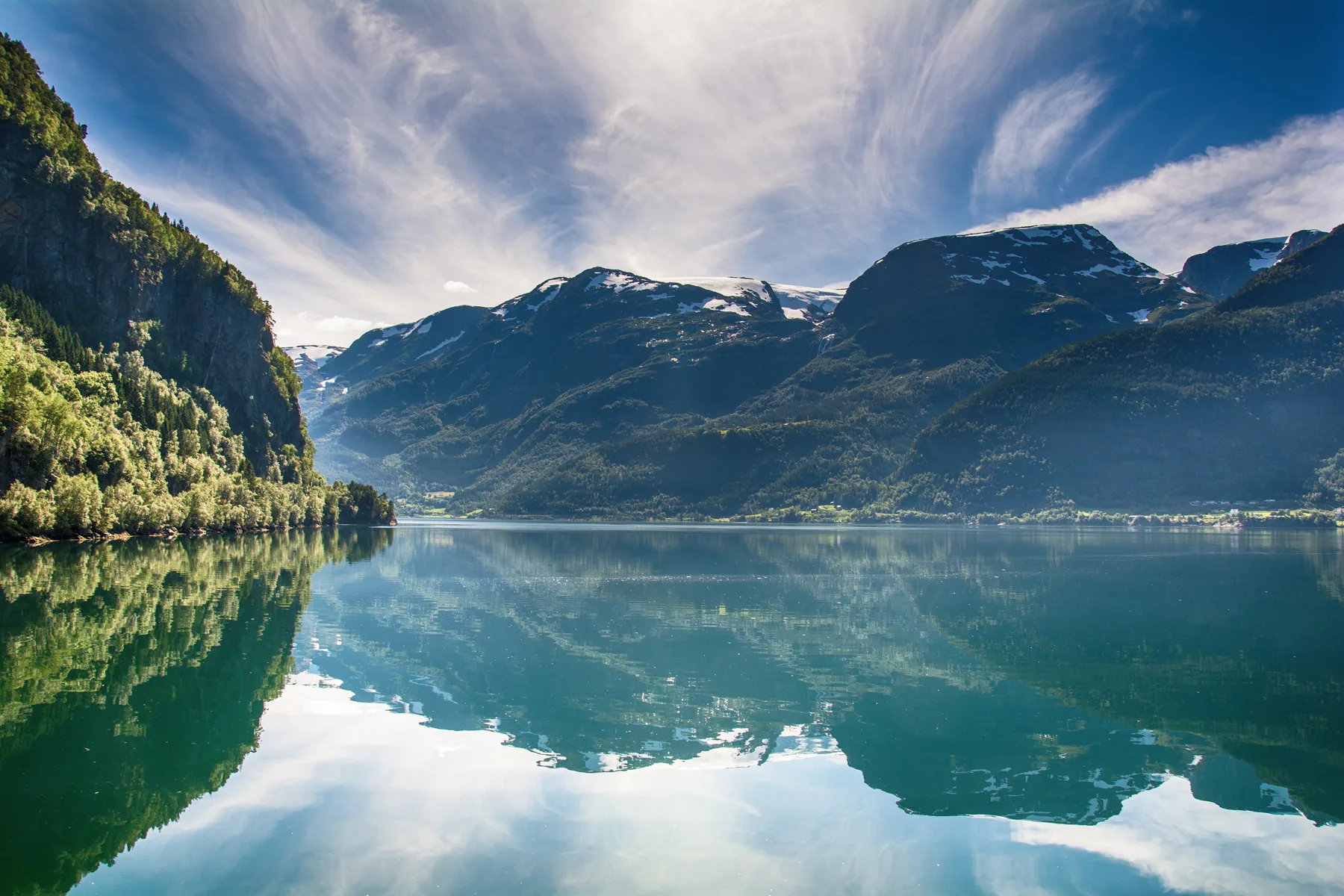
The real luxury of the fjords is space, stillness and time to take it all in.
Even the journeys between these places are part of the experience. A railway can climb from the water into the mountains, a ferry can glide past remote farms and a scenic road can reveal another extraordinary view around each bend. Travelling here makes the landscape the main event.
Finding your own pace
There is no single way to explore the fjords. A carefully planned self-drive offers freedom to stop at viewpoints, walk lesser-known trails and stay in small waterfront hotels. Rail and ferry journeys create a more relaxed itinerary, with the scenery unfolding while someone else takes care of the route. A coastal voyage can connect historic towns, remote islands and fjord landscapes in one seamless journey.
The best itineraries balance movement with time in each place. You might spend a morning kayaking on still water, follow a path to a panoramic viewpoint, visit a local farm or simply sit beside the fjord as the evening light changes. Bergen, with its colourful harbour and lively food scene, makes a natural beginning or end, but the quieter days beyond the city are often the ones travellers remember most.
Ewa’s practical notes
- Allow time for the journeys as well as the destinations.
- Pack light layers and waterproof clothing, even in summer.
- Book popular rail journeys, ferries and distinctive hotels early.
- Include at least one slower day beside the water.
When should you travel?
Late spring and summer bring long days, green valleys and waterfalls strengthened by melting snow. This is an ideal time for walking, boat trips and scenic drives, although the best-known locations are also at their busiest.
Early autumn offers softer light, changing colours and a quieter atmosphere. Winter creates a completely different journey, with snow-covered scenery and short, atmospheric days, but some seasonal routes and activities may be unavailable. Your ideal time depends on whether you picture long walks, peaceful villages, a coastal voyage or a snowy northern adventure.
A fjord holiday can be a short escape or part of a wider journey through Norway. With thoughtful planning, the transport becomes effortless, the pace feels natural and there is room for spontaneous moments along the way. This is a landscape worth seeing, but more importantly, it is one worth experiencing slowly.